
Attachment & Developmental Trauma Therapy in Singapore
Many adults and couples struggle with emotional distress, relationship difficulties, or a persistent sense that something is “off” — even when life appears stable on the surface. Anxiety, emotional numbness, repeated relationship conflict, or feeling unseen are often treated as isolated problems. In reality, these experiences are frequently rooted in attachment trauma and developmental trauma.
At All in the Family Counselling, we offer trauma-informed, attachment-focused therapy in Singapore for individuals and couples who want deeper understanding, lasting change, and emotionally safe relationships.
What Is Attachment and Developmental Trauma?
Attachment and developmental trauma develop when early relationships did not consistently provide emotional safety, attunement, or support. This does not require obvious abuse or neglect. Trauma can form in families that were loving but emotionally unavailable, overwhelmed, unpredictable, or unable to respond to a child’s emotional needs.
These early experiences shape:
- how safe we feel in relationships
- how we regulate emotions
- how we respond to conflict and closeness
- how we experience ourselves and others
Rather than existing as memories alone, trauma is carried in the nervous system and often re-emerges in adult life under stress or intimacy.
How Attachment Trauma Affects Adults
Adults with unresolved attachment trauma may experience:
- emotional overwhelm or emotional numbness
- anxiety, depression, or chronic stress
- difficulty trusting or relying on others
- fear of abandonment or fear of closeness
- repeated relationship patterns that feel hard to change
- intense reactions to conflict or perceived rejection
Many people seeking adult trauma therapy in Singapore are highly functional, capable, and successful — yet feel emotionally disconnected, exhausted, or stuck.
👉 Learn more in How Attachment Trauma Affects Adult Relationships

Trauma and Relationships
Attachment trauma often becomes most visible in close relationships. Romantic partnerships can activate old emotional patterns, leading to cycles of conflict, withdrawal, or emotional distance.
Common relationship patterns include:
- repeated arguments that never resolve
- one partner pursuing while the other withdraws
- emotional shutdown or defensiveness
- feeling unseen, unheard, or unsafe despite effort
These patterns are not signs of incompatibility. They are nervous-system responses shaped by early relational experiences.
👉 Explore this further in When Couple’s Therapy Isn’t Enough
Emotional Numbness and Overwhelm
Some people respond to trauma by feeling too much — constant anxiety, emotional flooding, irritability. Others cope by feeling too little — numbness, detachment, or disconnection from emotions and relationships.
Both are adaptive responses developed to survive earlier emotional environments.
👉 Read more in Emotional Numbness and Overwhelm: Developmental Trauma in Adults
Infidelity, Trust, and Attachment Injury
Infidelity is often experienced as a profound attachment injury. For many couples, betrayal activates deep fear, grief, shame, and loss of emotional safety — especially when attachment trauma is already present.
Healing after infidelity requires more than agreements or reassurance. It requires trauma-informed care that addresses nervous-system responses, emotional safety, and attachment wounds.
👉 Learn more in Infidelity, Attachment Trauma, and Relationships
Feeling Unseen and Attachment Wounds
Feeling unseen, unheard, or emotionally alone in relationships is one of the most painful consequences of attachment wounds. Even when communication is frequent, emotional connection may feel missing.
This experience often reflects early relational patterns rather than present-day failure.
Our Trauma-Informed Approach
At All in the Family Counselling, therapy is grounded in:
- attachment theory
- trauma-informed practice
- nervous-system regulation
- relational safety
We do not rush insight or force change. Therapy focuses on understanding how your patterns developed and supporting your system to experience safety, regulation, and connection — often for the first time.
Our approach may integrate:
- attachment-focused therapy
- somatic awareness
- parts-based work
- trauma-informed relational therapy
Individual Trauma Therapy in Singapore
Individual counselling supports adults who:
- feel emotionally overwhelmed or numb
- struggle with anxiety, burnout, or shutdown
- sense that early experiences still affect them
- want to understand themselves with compassion
You do not need a clear trauma story to benefit from trauma-informed therapy.
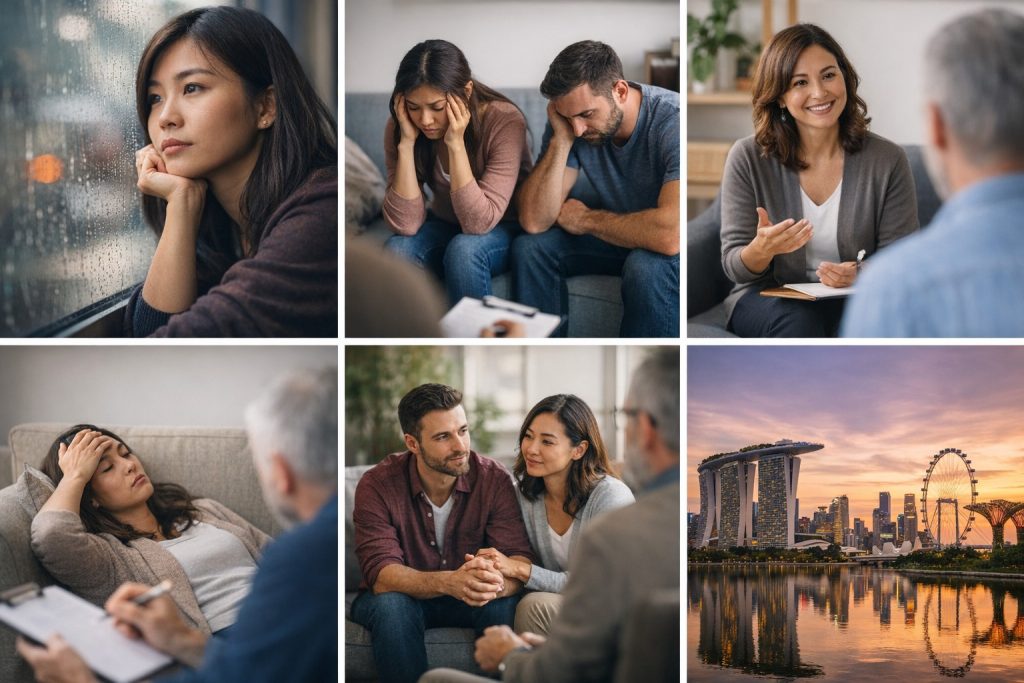
Trauma-Informed Couple Counselling in Singapore
Couple counselling is available for couples experiencing:
- repeated conflict or emotional distance
- shutdown, defensiveness, or reactivity
- attachment injuries, including infidelity
- feeling stuck despite trying traditional therapy
We help couples slow down patterns, build emotional safety, and reconnect in ways that feel sustainable and respectful.
Culturally Sensitive Care for Singapore and Expat Communities
Living and working in Singapore can bring unique pressures:
- high performance expectations
- limited family support for expats
- cultural differences around emotion and communication
- privacy concerns and stigma around therapy
Our therapists are experienced in working with local and international clients, offering culturally sensitive, respectful care that honours individual values and backgrounds.
Healing Is Possible
Attachment and developmental trauma are not flaws — they are adaptations formed in response to early environments. With trauma-informed therapy, these patterns can be understood and transformed.
Clients often experience:
- greater emotional regulation
- deeper self-understanding
- improved relationships
- increased emotional safety and resilience
Healing is not about fixing yourself. It is about creating the conditions where your nervous system no longer needs to stay in survival mode.
Begin Your Healing Journey
If you are seeking attachment and developmental trauma therapy in Singapore, support is available – All in the Family Counselling