
As tools like ChatGPT become more accessible, many people are asking an understandable question:
If AI can help me reflect, understand my patterns, and feel calmer — do I still need therapy?
This question comes up frequently among thoughtful, high-functioning adults in Singapore, particularly professionals and expats who value efficiency, privacy, and self-directed learning.
At All in the Family Counselling, we believe it’s important to answer this honestly and respectfully.
AI can be useful in certain ways.
But it cannot replace therapy — especially when trauma, attachment wounds, emotional numbness, overwhelm, or relationship distress are involved.
Understanding the Difference: Insight vs Healing
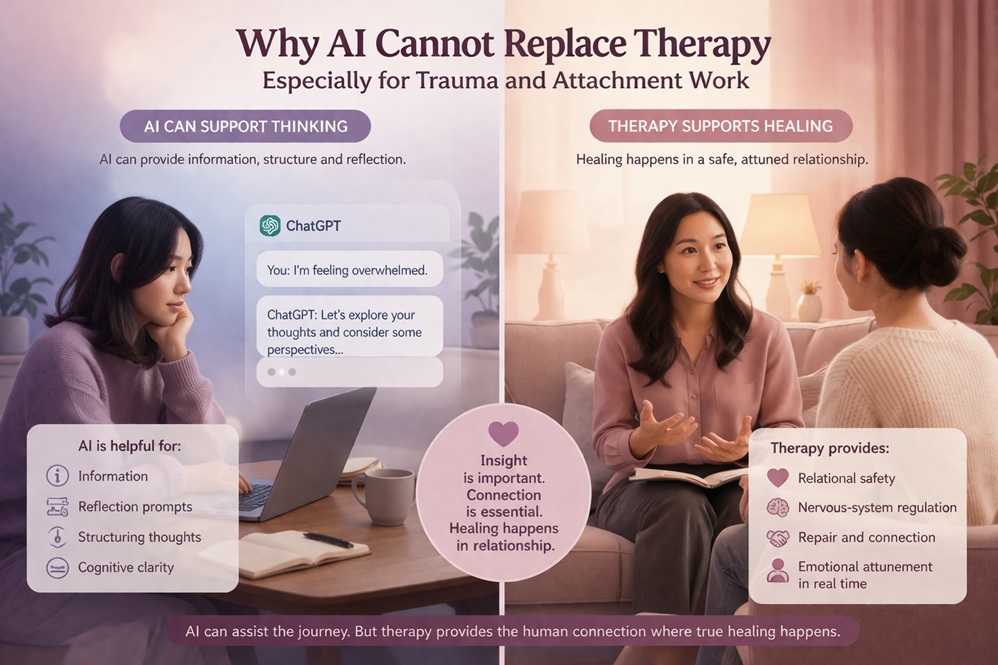
AI tools are excellent at providing:
- information
- structure
- reflection prompts
- cognitive clarity
These can support insight.
But insight alone does not heal trauma.
Trauma — particularly attachment and developmental trauma — lives in the nervous system and in relational patterns, not just in thoughts or understanding. Healing requires experiences that help the body and emotional system feel safe in connection with another human being.
What Therapy Provides That AI Cannot
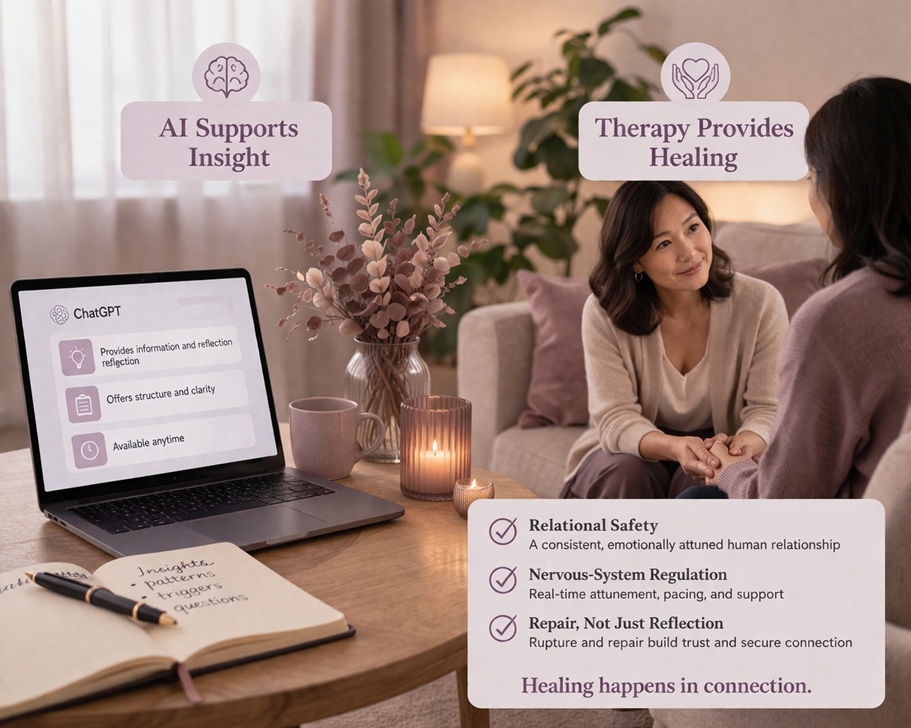
1. Relational Safety
Attachment wounds are formed in relationships — and they are healed in relationships.
Therapy offers:
- a consistent, emotionally attuned relationship
- responsiveness to subtle emotional cues
- the experience of being seen and met in real time
AI cannot offer genuine relational presence. It does not experience you, respond emotionally, or build trust over time.
2. Nervous-System Regulation
Many trauma responses show up as:
- emotional overwhelm
- shutdown or numbness
- anxiety or panic
- reactivity or dissociation
A therapist can:
- notice when your system is activated
- slow the process down
- support regulation through pacing, presence, and attunement
AI cannot sense your nervous system or adjust moment-to-moment based on how you are responding.
3. Repair, Not Just Reflection
In therapy, moments of misunderstanding, rupture, or discomfort can be noticed and repaired. This is a powerful part of attachment healing.
AI cannot:
- rupture and repair relational trust
- model healthy emotional boundaries
- offer accountability or emotional responsibility
Without repair, attachment wounds remain intellectualised rather than transformed.
Why This Matters Especially for Trauma and Attachment
For people with attachment trauma, it can feel safer to:
- stay in thinking rather than feeling
- analyse rather than experience
- self-soothe alone rather than risk vulnerability
AI can unintentionally support this avoidance — not because it is harmful, but because it has no way to invite you into relational experience.
Therapy gently supports clients to move from coping alone toward being supported safely.
A Singapore Perspective: Why This Question Comes Up Here
In Singapore, many clients are:
- highly self-reliant
- accustomed to managing pressure independently
- concerned about stigma or privacy
- navigating relocation, cultural transitions, or isolation
In this context, AI can feel like an efficient, private solution. But efficiency is not the same as healing — especially when emotional pain is long-standing or relational in nature.
When Therapy Is Especially Recommended
While AI may support reflection, working with a therapist is strongly recommended if you experience:
- emotional numbness or overwhelm
- anxiety or depression that feels persistent
- trauma responses or attachment difficulties
- repeated relationship conflict or emotional distance
- infidelity or trust injuries
- feeling unseen, unsafe, or disconnected in relationships
These experiences require relational care, not just cognitive understanding.
A Trauma-Informed Position on AI
At All in the Family Counselling, we take a balanced and ethical view:
- AI can support thinking
- Therapy supports healing
- One does not replace the other
We encourage clients to bring all tools they are using — including AI — into therapy, where they can be explored and integrated safely.
You can learn more about:
- Individual counselling
- Couple counselling
- Our attachment – and trauma-informed approach to therapy
Human Connection Still Matters
The fact that people are turning to AI for emotional support tells us something important: many are longing to be heard, understood, and supported.
Therapy exists to meet that need — not through perfect answers, but through real human presence, safety, and relationship.
AI can assist the journey.
But healing happens in connection.