
As more people turn to AI tools like ChatGPT for reflection and emotional support, an important question is emerging in therapy rooms across Singapore:
Can I use ChatGPT alongside therapy — and is that okay?
For many clients, the answer is yes — when used thoughtfully, transparently, and with clear boundaries.
At All in the Family Counselling, we increasingly see clients using AI tools between sessions to organise thoughts, reflect on experiences, or prepare for therapy conversations. When approached intentionally, this can support the therapeutic process rather than undermine it.
Why Clients Use ChatGPT Between Therapy Sessions
Many clients describe therapy as meaningful — but emotionally demanding. Between sessions, they may want to:
- capture insights before they fade
- make sense of emotional reactions
- slow down anxious thinking
- find language for things that feel hard to say
In Singapore’s fast-paced environment, where time is limited and emotional processing is often postponed, AI tools can feel like a practical way to stay engaged with inner work between sessions.
Ways ChatGPT Can Support Therapy (Not Replace It)
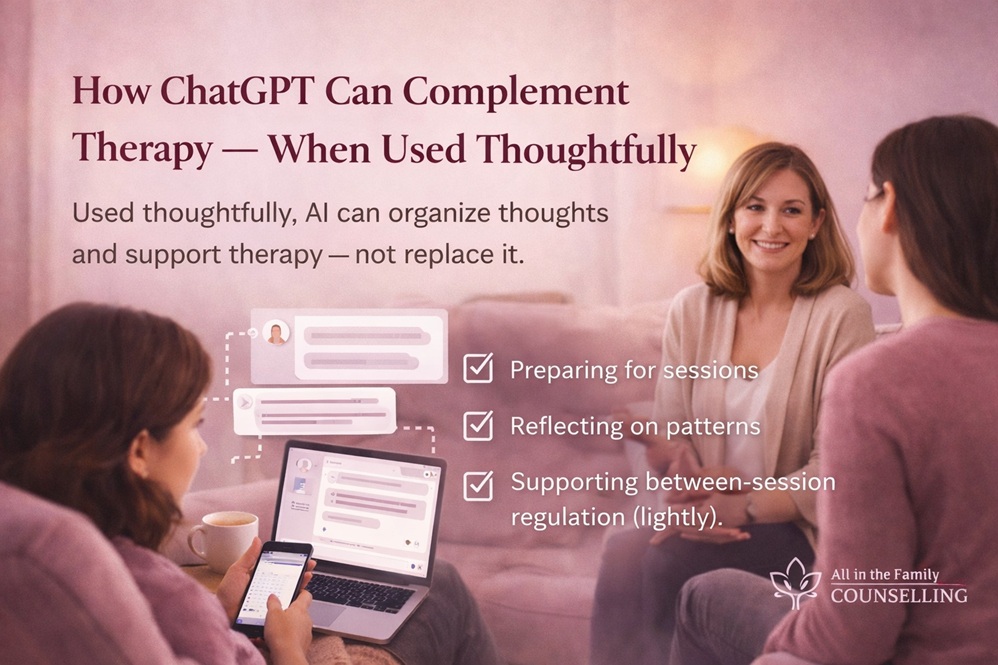
Used carefully, ChatGPT can complement therapy in several specific ways.
1. Preparing for Therapy Sessions
Clients often use AI to:
- clarify what they want to talk about
- identify patterns since the last session
- organise thoughts when emotions feel tangled
This can help therapy sessions feel more focused — especially for those who struggle to speak freely under pressure.
2. Reflecting on Patterns and Triggers
ChatGPT can help clients:
- notice recurring themes in relationships
- reflect on emotional triggers
- explore different perspectives on a situation
This kind of reflection supports awareness — an important part of therapeutic work.
3. Supporting Between-Session Regulation (Lightly)
For some clients, structured reflection can:
- slow racing thoughts
- reduce rumination
- create a sense of containment
However, this works best for mild to moderate emotional states, not during acute distress or trauma activation.
Why Transparency Matters
One of the most important factors is openness.
When clients bring their AI reflections into therapy — rather than keeping them separate — it strengthens the therapeutic process. Sharing insights gained, questions raised and moments of confusion, allows the therapist to help integrate reflection into emotional and relational work.
At All in the Family Counselling, we welcome these conversations. Therapy works best when nothing important is hidden.
What ChatGPT Cannot Do — Even When Used Alongside Therapy
Even when used thoughtfully, AI has clear limits.
It cannot:
- sense emotional overwhelm or shutdown
- adjust to your nervous system
- notice subtle avoidance or dissociation
- respond relationally to pain or vulnerability
This is particularly important for clients working with:
- attachment trauma
- developmental trauma
- emotional numbness or overwhelm
- relationship distress
Insight alone does not heal trauma. Healing requires relational safety and co-regulation — both of which happen in therapy.
Using AI Without Replacing Emotional Processing
A trauma-informed approach encourages clients to ask:
- Is this helping me feel more connected — or more distant?
- Am I using AI to support therapy, or to avoid vulnerability?
For individuals with attachment wounds, it can feel safer to stay in thinking rather than feeling. Therapy helps gently shift this balance — without judgement.
A Trauma-Informed Perspective on AI and Therapy
At All in the Family Counselling, therapy is grounded in attachment-focused, trauma-informed care.
We support clients in:
- understanding emotional and relational patterns
- regulating the nervous system
- developing emotional safety
- integrating insight with lived emotional experience
AI tools may assist reflection — but therapy provides the relational context where healing occurs.
You can learn more about Individual counselling for trauma-informed support, and Couple counselling for relational and attachment-based work.
Using ChatGPT Well: A Balanced Approach
Used intentionally, ChatGPT can be:
- a thinking companion
- a journaling aid
- a preparation tool
But it works best when:
- it complements therapy rather than replaces it
- insights are brought into sessions
- emotional processing still happens with a therapist
This balanced approach respects both the usefulness of technology and the irreplaceable role of human connection.