
As AI tools like ChatGPT become more common, many people are using them to reflect on emotions, relationships, and mental health struggles. For some, this feels helpful and grounding. For others, it quietly becomes the only place they process emotional pain.
At All in the Family Counselling, we take a balanced, trauma-informed view:
AI can be useful — but relying on AI alone for emotional or trauma support carries real risks, especially when deeper attachment or developmental wounds are present.
Understanding these risks is not about fear. It’s about emotional safety.
Why People Turn to AI Instead of Support
Many people don’t intend to replace therapy with AI. It often happens gradually.
Common reasons include:
- wanting privacy or anonymity
- fear of being judged or misunderstood
- previous experiences of not feeling helped
- time constraints or high work demands
- discomfort with vulnerability
- growing used to “handling things alone”
In Singapore, where emotional self-containment and high performance are often valued, this pattern can feel especially natural — even responsible. But emotional coping strategies that once protected us can later limit healing.
Risk 1: Emotional Bypassing
One of the biggest risks of using AI alone is emotional bypassing.
This happens when people:
- analyse feelings instead of experiencing them
- stay in insight without emotional integration
- understand why they feel a certain way, but don’t feel relief
AI is excellent at helping people think about emotions.
But trauma healing requires feeling safely, in relationship — not just understanding.
Over time, bypassing can lead to:
- persistent emotional numbness
- unresolved anxiety or stress
- a sense of “knowing a lot, but not changing”
Risk 2: Over-Intellectualising Pain
For individuals with attachment trauma, it often feels safer to:
- stay cognitive
- remain self-sufficient
- avoid needing others
AI can unintentionally reinforce this pattern by keeping emotional work in the realm of thinking.
When pain is intellectualised rather than processed:
- the nervous system remains activated or shut down
- relational needs stay unmet
- emotional fatigue increases
This is not a personal failure — it is a survival strategy that once made sense.
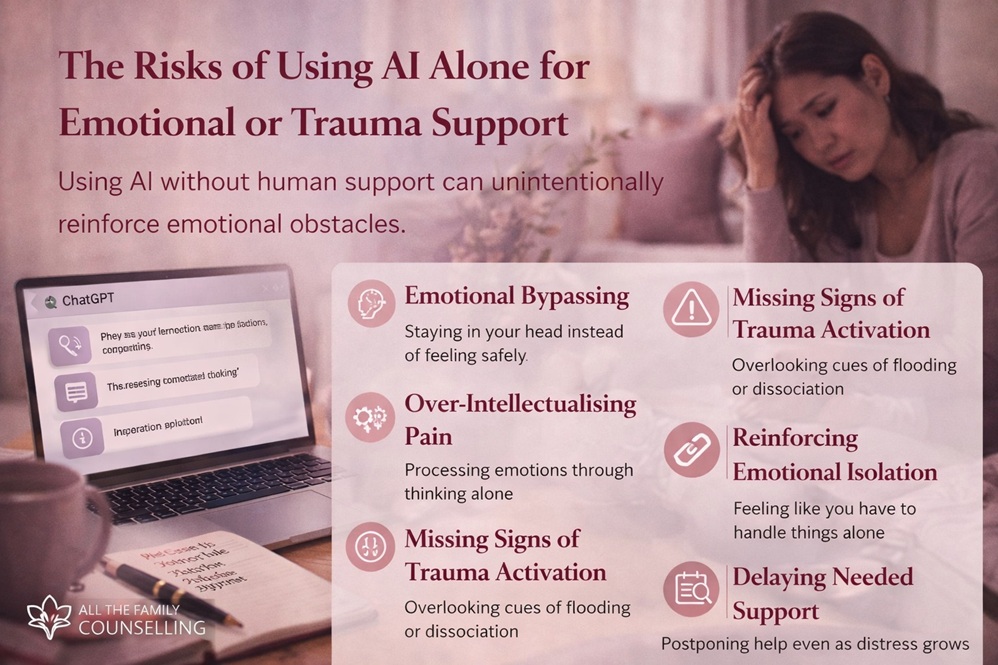
Risk 3: Missing Signs of Trauma Activation
AI cannot reliably recognise when someone is experiencing:
- trauma activation
- emotional flooding
- dissociation or shutdown
- worsening depression or anxiety
A therapist can notice:
- changes in tone or pace
- avoidance or overwhelm
- moments when safety is compromised
Without this attuned response, individuals may push themselves too far emotionally — or stay stuck without realising support is needed.
Risk 4: Reinforcing Emotional Isolation
Using AI alone can unintentionally reinforce the belief:
- “I should handle this by myself.”
- “I don’t want to burden anyone.”
- “Needing help means I’m failing.”
For people with attachment wounds, this reinforces old patterns of emotional self-reliance — even when connection is what’s needed for healing.
Therapy gently challenges these beliefs by offering safe, consistent relational support.
Risk 5: Delaying Needed Support
For some, AI becomes a holding place that delays reaching out — even when emotional distress is growing.
Signs this may be happening include:
- repeatedly returning to the same issues without relief
- feeling worse after reflection rather than calmer
- increased isolation
- difficulty sleeping, functioning, or relating
At this point, additional insight is unlikely to help without human support.
A Trauma-Informed Perspective on Safety
At All in the Family Counselling, we encourage clients to think in terms of support layers, not replacement.
AI may support:
- journaling
- reflection
- preparing for therapy
But therapy supports:
- emotional regulation
- nervous-system safety
- attachment healing
- relational repair
These roles are not interchangeable. You can learn more about: Individual counselling for trauma-informed support and Couple counselling when relational patterns are part of the struggle.
Using AI More Safely
If you choose to use AI tools, consider:
- using them alongside therapy, not instead of it
- noticing whether reflection leads to relief or avoidance
- bringing insights into therapy sessions
- seeking support when emotions feel overwhelming or stuck
These steps help ensure AI remains a tool — not a substitute for care.