
As AI tools like ChatGPT become more embedded in daily life, many people are no longer asking whether to use AI for reflection or emotional support — but how to use it well.
For individuals and couples in Singapore, especially high-functioning professionals and expats, AI can feel like a practical, accessible companion for making sense of thoughts, emotions, and relationships.
The most important question is not AI versus therapy, but rather:
How can AI and therapy be used together in a way that supports healing — rather than replacing it?
At All in the Family Counselling, we approach this question from a trauma-informed and attachment-focused perspective.
AI and Therapy Are Not Opposites
A common misconception is that using AI means therapy is no longer necessary. In reality, AI and therapy serve very different functions.
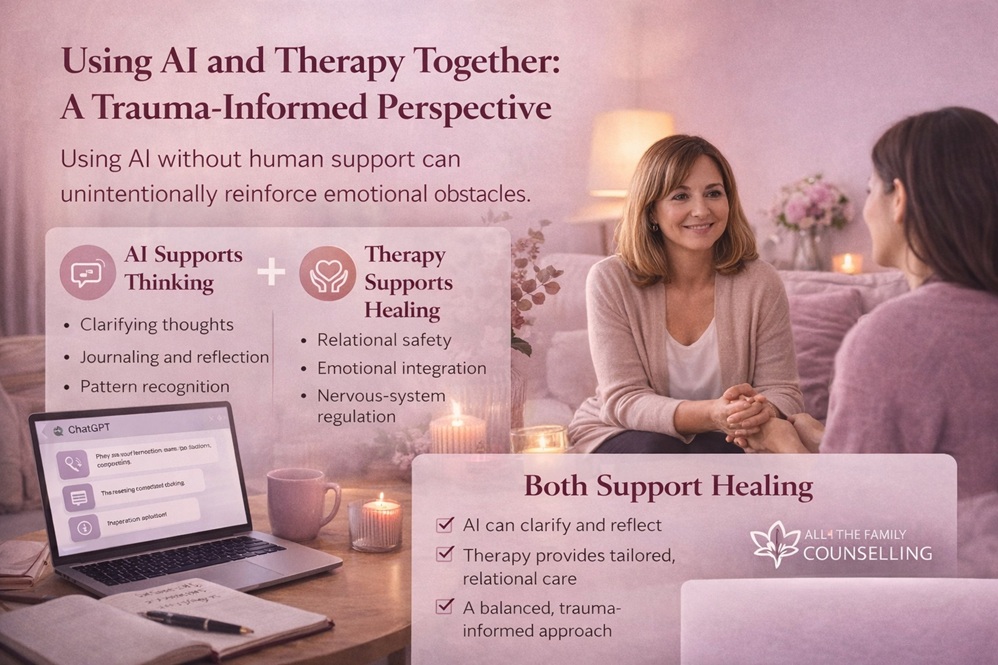
- AI supports thinking
- Therapy supports healing
When these roles are understood clearly, they can complement each other — without confusion or harm.
What AI Can Support
Used thoughtfully, AI tools can help with:
- clarifying thoughts and emotions
- journaling and reflection
- identifying patterns or themes
- preparing for therapy sessions
- finding language for difficult experiences
For some clients, especially those who struggle to articulate emotions or feel overwhelmed in sessions, this kind of preparation can make therapy feel more accessible and focused.
What Therapy Provides That AI Cannot
Therapy offers experiences that are essential for trauma and attachment healing:
Relational Safety
Attachment wounds are healed through consistent, emotionally attuned relationships. Therapy provides a space where emotions can be met safely — not just analysed.
Nervous-System Regulation
Trauma responses such as overwhelm, shutdown, anxiety, or emotional numbness require regulation, not just insight. Therapists can notice activation and respond in ways AI cannot.
Emotional Integration
Healing happens when insight is integrated with emotional experience, bodily awareness, and relational repair — all of which require human presence.
Using AI Within Therapy, Not Instead of It
A trauma-informed approach encourages clients to bring AI use into therapy, rather than keeping it separate.
This might include:
- sharing reflections or insights generated between sessions
- noticing how AI use affects emotional states
- exploring whether AI is supporting connection or reinforcing avoidance
When AI use is transparent, therapists can help integrate it in ways that support — rather than replace — relational healing.
A Singapore Context: Why This Balance Matters
In Singapore, many individuals:
- are highly self-reliant
- value efficiency and independence
- have limited time or emotional space
- feel pressure to “cope” quietly
AI can feel like a perfect solution in this context. But trauma-informed care recognises that self-sufficiency alone does not heal relational wounds.
Therapy offers a counterbalance: a place where support is not earned, rushed, or optimised — but offered consistently.
For Individuals
If you are using AI for reflection, therapy can help you:
- move from thinking to feeling
- notice emotional patterns beneath insight
- develop self-compassion and regulation
- experience safe connection
You can learn more about individual counselling and trauma-informed support at All in the Family Counselling.
For Couples
AI may help couples:
- reflect on communication patterns
- identify recurring conflicts
- prepare for difficult conversations
But relational healing requires real-time emotional safety, attunement, and repair, especially when attachment injuries or trauma are present. Learn more about couple counselling and trauma-informed relationship support.
A Balanced, Trauma-Informed Position
From a trauma-informed perspective:
- AI can be a tool
- Therapy is a relationship
- Healing happens through connection, safety, and integration
When AI supports reflection and therapy supports emotional and relational healing, clients often experience deeper insight and meaningful change.
You Don’t Have to Choose One or the Other
If you are using AI because you want understanding, clarity, or support — that makes sense.
If you are also seeking therapy because you want healing, connection, and emotional safety — that makes sense too.
These paths do not need to compete.
At All in the Family Counselling, we support clients in navigating both thoughtfully, ethically, and with care.
Learn more about our trauma-informed approach at 👉 https://www.allinthefamilycounselling.com/